
Systemic Team Coaching
Your team gives everything. Let's tend to what holds it all together.
Nonprofit leadership teams carry more than any org chart shows — the mission, the funding, each other, and whatever the last two years asked of them. This work strengthens the thing doing the carrying.
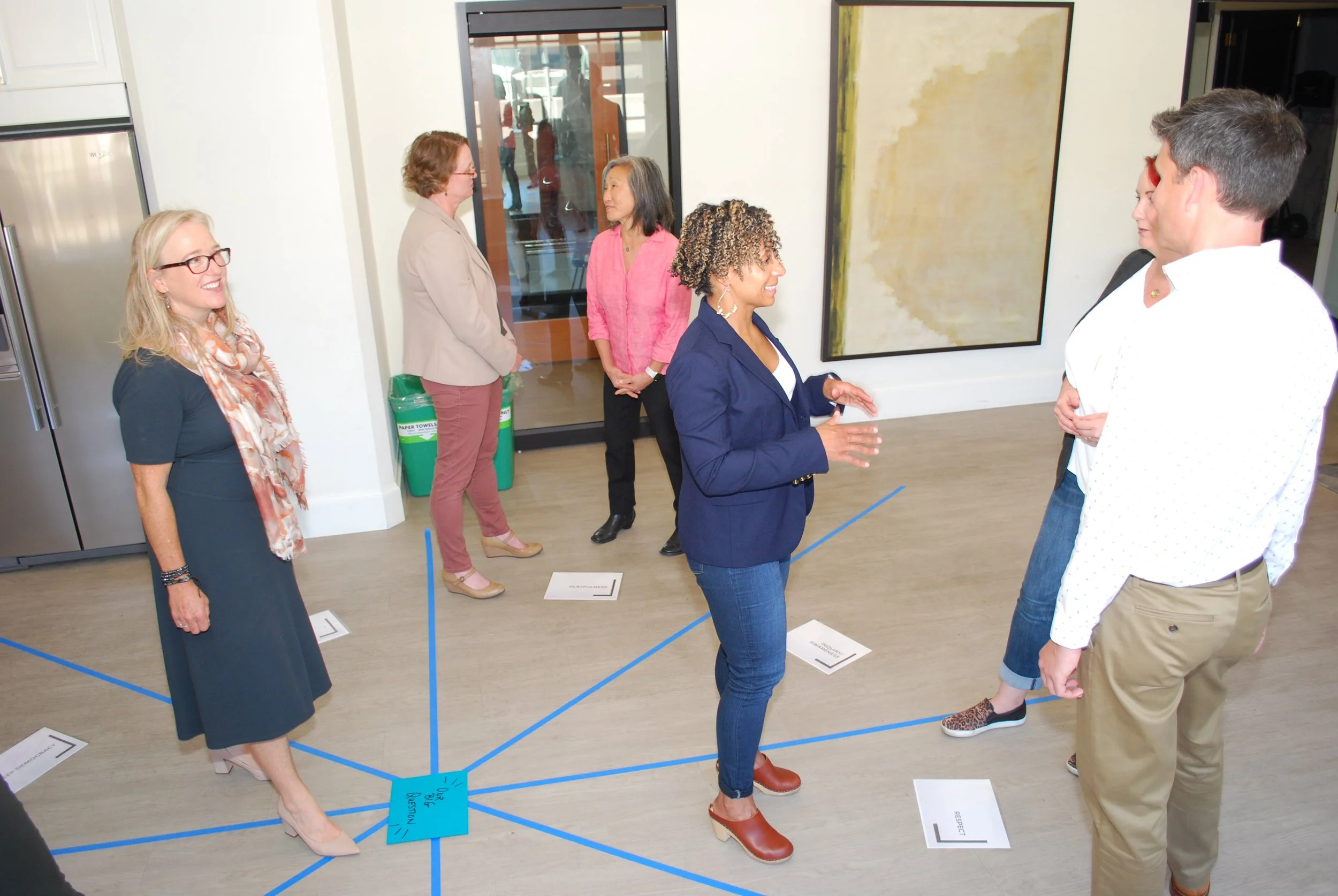
When teams call
Teams reach out at the moments that decide what comes next.
These moments bring opportunity and potential. Together we can realize that.
A founder leaves
The person who held it in their head is going, and everyone is quietly wondering what happens to the rest of it.
A strategy that won't stick
The plan is sound. Six months on, the team is doing what it always did.
The funding shifts
A grant ends, a funder changes direction, and the team has to decide together what the work becomes.
Something hard happened
The team went through it together and never got the room to say so out loud.
Two groups, one org
Departments that need each other operate like separate organizations, and the seams show at every handoff.
A merger or restructure
New reporting lines land on old relationships, and nobody has renegotiated how they work.

The work
The team is the client.
Most leadership development works on individuals and hopes it adds up. Systemic team coaching works on the relationships, the agreements, and the patterns running between people — because that's where a team's capacity actually lives.
What you get
A sequence of sessions over months, so change has time to take hold
Work on live material — your actual decisions, in real time
Agreements the team makes and can hold each other to
A shared language for the thing everyone could feel and nobody could name
Often two coaches in the room, seeing more than one person can
What this replaces
The one-day offsite that felt good and changed nothing
A consultant's recommendations the team never owned
Individual coaching for six people who still can't decide together
A personality assessment everyone quotes and no one uses
How an engagement runs
Slow enough to be real.
Every engagement gets shaped to the team in front of me, but the shape underneath stays roughly this.
1
We talk
A conversation with you, and usually one or two others, about what you're living. No cost, no commitment. I'll tell you honestly if this work fits your moment or if something else would serve you better.
Half an hour
2
The team says where it is
Individual conversations and a team diagnostic give everyone a way to be honest before we're all in a room together. The picture that comes back belongs to the team, not to me — and reading it together is often the first real session.
Before we begin
3
We work
A series of sessions on live material — the decision in front of you, the conversation that keeps stalling, the pattern that shows up every time the pressure rises. The team practices differently while the stakes are real, which is the only way anything holds.
Several months
4
The team carries it
We name what changed, what the team now owns, and what it will take to keep. I plan for my own exit from the start — the goal is a team that no longer needs me in the room.
Closing
What tends to happen next
Beyond the leadership team.
When a leadership team changes how it finds alignment, how it decides, and how it tells the truth to itself, the people reporting to them notice . Directors start running their own meetings differently. The change moves outward and culture shifts organization-wide.
That cascade is one reason I work with the team at the top of a system. It's the most leveraged room in the organization.

Timing
Is this your moment?
Now is the time when
The team has real work to do together, and busting silos is a necessary and urgent.
The leader is willing to assess their own patterns, too
People ready to do the work to be (more) honest with each other
The team will commit to a full journey.
Something else serves you better when
The leader is avoiding taking a personnel action
A decision is already made and you want help announcing it
The team needs technical expertise rather than a different way of working
The team will commit to single facilitated day or short series.
I'll say which of these I think you're in during our first conversation. Being wrong about fit costs you far more than it costs me.
Start with a conversation
Half an hour, no cost, no pitch. Bring what’s actually happening and we’ll look at it together.